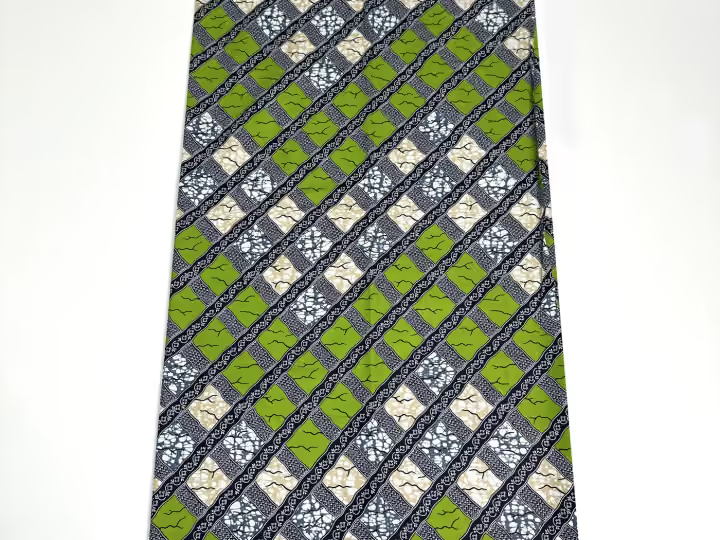
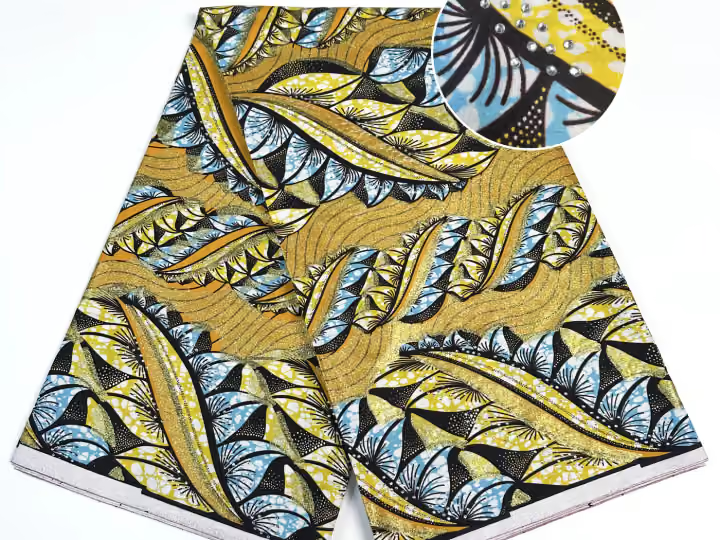
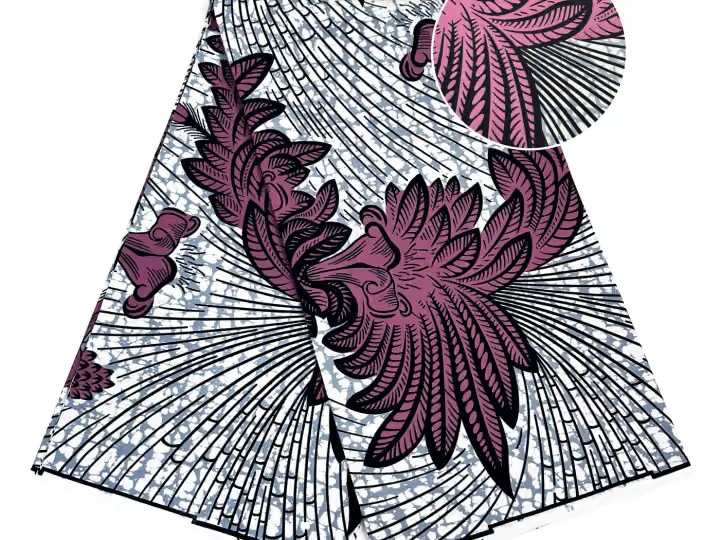
Choose a representative fold
Check what the customer sees first when the piece is folded. Avoid making a large motif look like a small repeat by showing only one fragment. Keep the product reference with the display record so staff can locate the exact design even after the physical arrangement changes.
Offer a fuller comparison
Prepare a view that opens enough material to show the complete motif and scale. Where a reverse will matter to the customer's garment, include a paired side comparison. Do not present the display fold as a measured cutting layout or as proof that a particular garment fits within one piece.
Explore the productsKeep the information consistent
For our wax category, retain the confirmed 100% cotton, 115 cm width and six yards per piece in the buying information. Confirm any additional property separately. A stack of folded fabric does not establish current quantities of every colour or the availability of a pictured batch.
Record useful customer questions
Note which details buyers ask to see after viewing the fold. Use those questions to improve the display and future sourcing brief. Separate a request to open a piece from an actual sale; presentation feedback alone is not evidence that a print is a proven bestseller.
A practical comparison
| View | Buyer question answered | Keep clear |
|---|---|---|
| Folded display | Which design interests me? | Exact product reference |
| Opened motif | How large is the pattern? | Scale and full shape |
| Buying information | What is the sales unit? | Confirmed wax specification |
Your buying checklist
- Check the first visible motif
- Provide an opened design view
- Keep sales units beside the reference
- Separate display interest from sales
Discuss your fabric requirements with Rose
Save references, note quantities and send your questions. Confirm specifications and availability for the exact items you need.