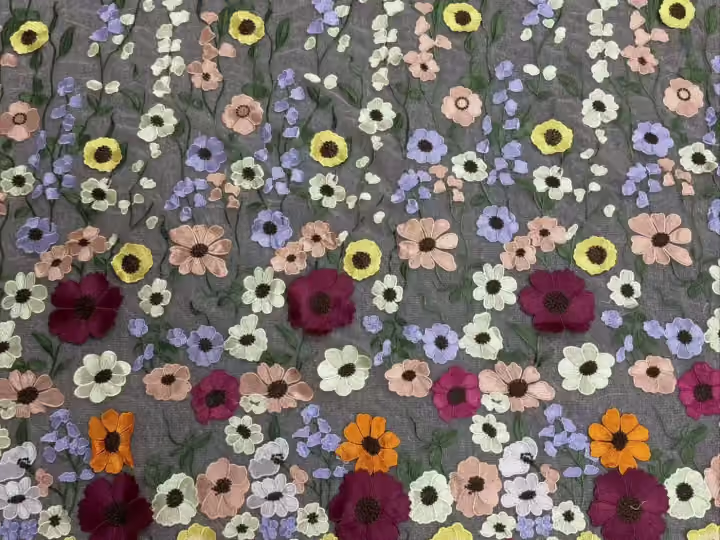
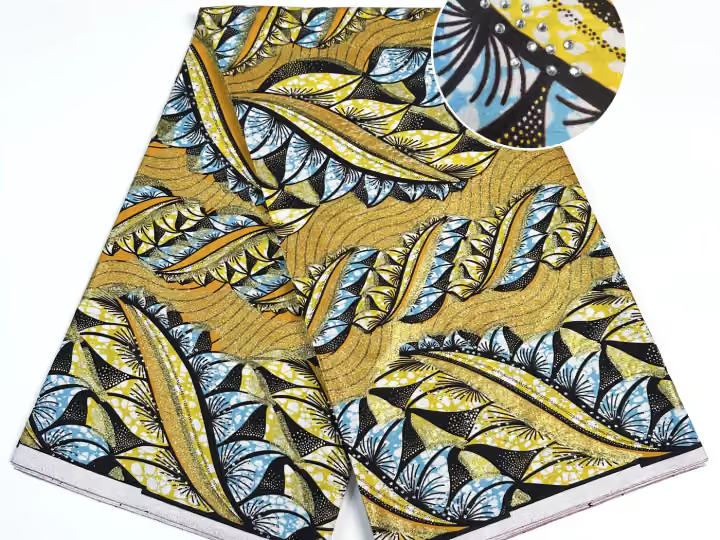
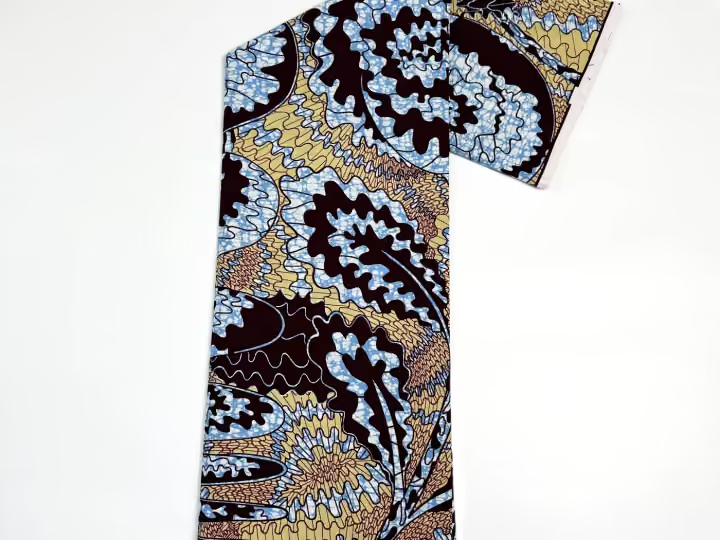
Use a complete view to understand distribution
Look at how motifs sit beside each other and how colours repeat across the material. Keep the exact catalogue reference. Do not compare a close-up of one design with a wide view of another as if the apparent motif sizes were measured on the same scale.
Request a dimension for the key element
Identify one recognisable motif and ask for its approximate width or repeat measurement. Explain why the size matters to your pattern. A visible ruler can help when the endpoints and direction are clear, but perspective and folds still need attention. Keep any supplied dimension with the particular reference.
Explore the productsPlace the motif on the intended garment panel
Ask the maker to consider the front, sleeves and any smaller components. A motif suitable for a broad panel may be interrupted on a narrow section. Decide which areas need a complete feature and where free placement is acceptable. This is a garment decision, not a universal rule that one motif size is better.
Recheck length after agreeing placement
The wax range has confirmed 6-yard pieces at 115 cm width, but those dimensions do not guarantee a fixed garment yield. A placement preference may affect the cutting plan. Have the maker calculate the requirement from the chosen design and actual sizes, then state the number of pieces clearly in the enquiry.
A practical comparison
| View | Use |
|---|---|
| Whole design | Distribution and colour balance |
| Measured motif | Actual scale |
| Pattern placement | Effect on the intended garment |
Your buying checklist
- Compare views at a similar scale.
- Request the key motif dimension.
- Mark important garment areas.
- Recalculate quantity from the layout.
Discuss your fabric requirements with Rose
Save references, note quantities and send your questions. Confirm specifications and availability for the exact items you need.