Identify the measurement points
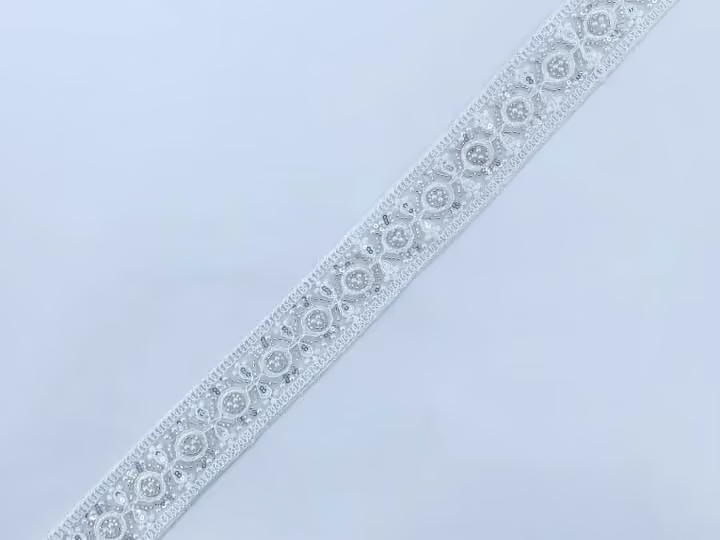
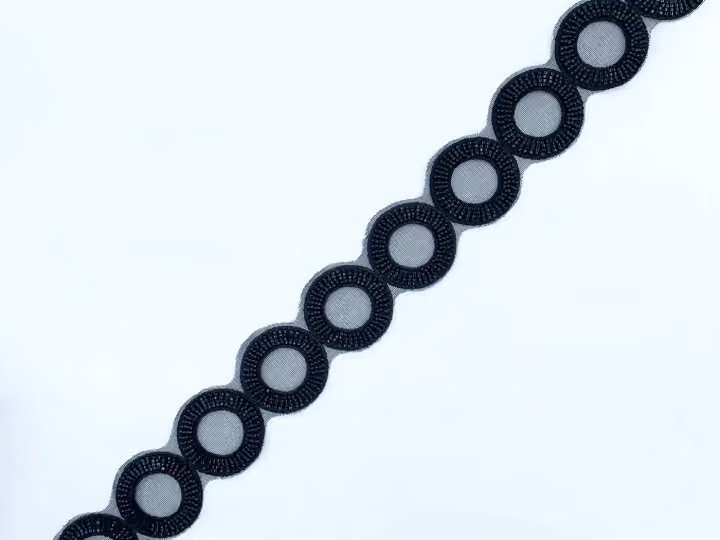
Ask for a flat sample view with a ruler and the full edges visible. Mark where total width is measured, especially if the outline varies along the repeat. A ruler shown beside only one narrow section may not describe the full decorative outline.
Mark the attachment line
Have the maker place the trim on the actual garment edge and identify what is concealed by a seam, fold or overlap. Measure the intended visible band from that approved line. Keep this project measurement separate from the supplier's product width.
Explore the productsCompare in the garment context
Review the visible band beside the sleeve, hem or panel it will decorate. Check the narrow and wide parts of an irregular outline. Do not infer that a broad decorative edge provides a broad secure attachment area; the maker must assess the actual structure.
Order against the approved view
Retain the ruler image, application sample and product number. Confirm sale unit and required lengths separately from width. If the application line changes, recheck the visible result before carrying forward the original appearance approval.
A practical comparison
| Measure | Meaning | Used for |
|---|---|---|
| Overall width | Full trim outline at stated points | Product comparison |
| Attachment area | Part hidden or fixed in construction | Maker's application plan |
| Visible band | Decoration exposed after assembly | Finished garment approval |
Your buying checklist
- Show full edges with a ruler
- Mark the real attachment line
- Measure the visible decoration
- Keep width separate from purchased length
Discuss your fabric requirements with Rose
Save references, note quantities and send your questions. Confirm specifications and availability for the exact items you need.