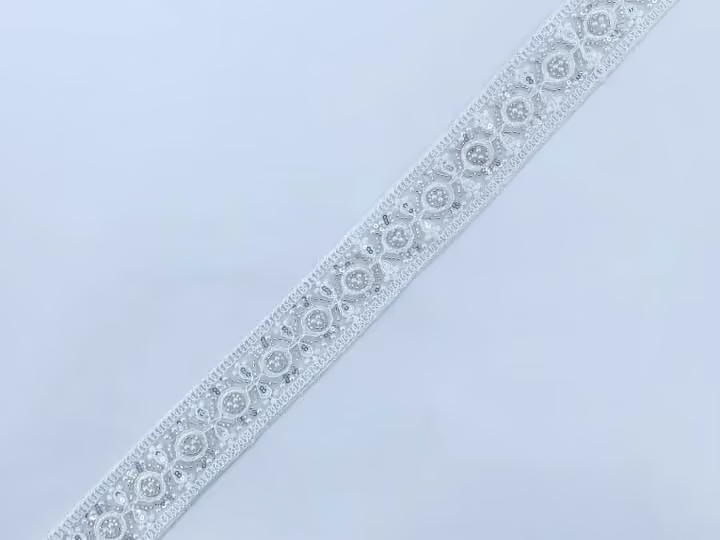
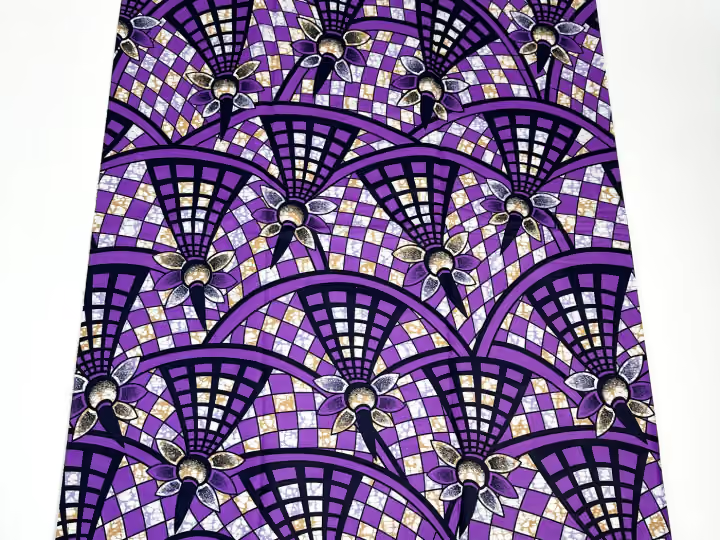
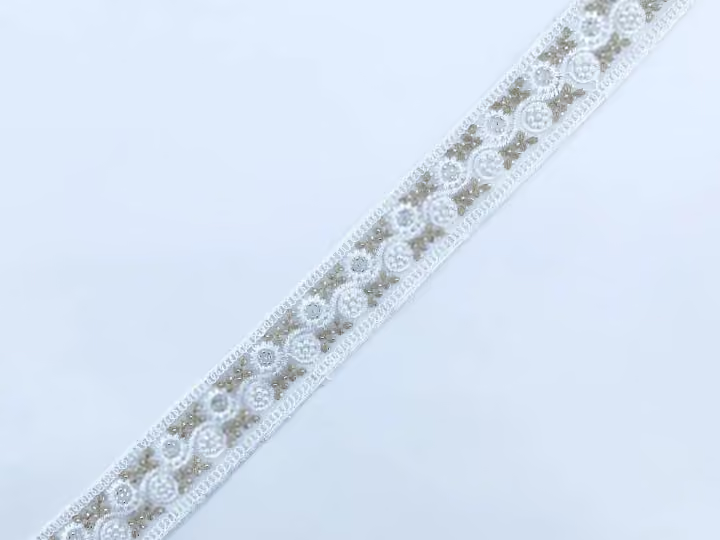
List every decorated edge
Separate the neckline, cuffs, waist or hem rather than writing one unexplained length per garment. Record the garment size used for measurement and whether both sides need decoration. Different sizes and styles may need different amounts, so one example should not automatically stand for the entire order.
Calculate a simple measured total
For illustration, if each of two cuffs uses 30 cm, one garment needs 60 cm for the cuffs. Ten identical garments need 600 cm, or 6 m, before any allowance. These are teaching figures, not catalogue dimensions or a recommended order quantity. Use the actual pattern measurements in your worksheet.
Explore the productsAsk the maker to explain any allowance
Joins, corners and motif placement may require additional length. Have the maker state why and how much, rather than applying a universal margin. Also ask whether the selected design can follow the proposed curve and whether its repeat affects where it can start or finish.
Convert the request into the selling unit
Tell Rose the required application length and ask for the item’s selling unit, minimum and supply format. Do not assume a trim is sold in the wax range’s 6-yard pieces. Keep measured demand, maker’s allowance and final agreed order quantity as three distinct entries.
A practical comparison
| Step | Measured length |
|---|---|
| Two cuffs per garment | 2 × 30 cm = 60 cm |
| Ten identical garments | 10 × 60 cm = 600 cm |
| Before any allowance | 600 cm = 6 m |
Your buying checklist
- Measure each decorated edge.
- Separate sizes where necessary.
- Record the reason for allowances.
- Confirm the trim selling unit.
Discuss your fabric requirements with Rose
Save references, note quantities and send your questions. Confirm specifications and availability for the exact items you need.