Name the corner and face
Send a full-size template with the angle, finished edge and visible face marked. Include any seam allowance separately. Tell the maker whether both sides will show when worn. A treatment acceptable on the inside of a cuff may be unsuitable on a front-facing neckline corner.
Compare feasible treatments
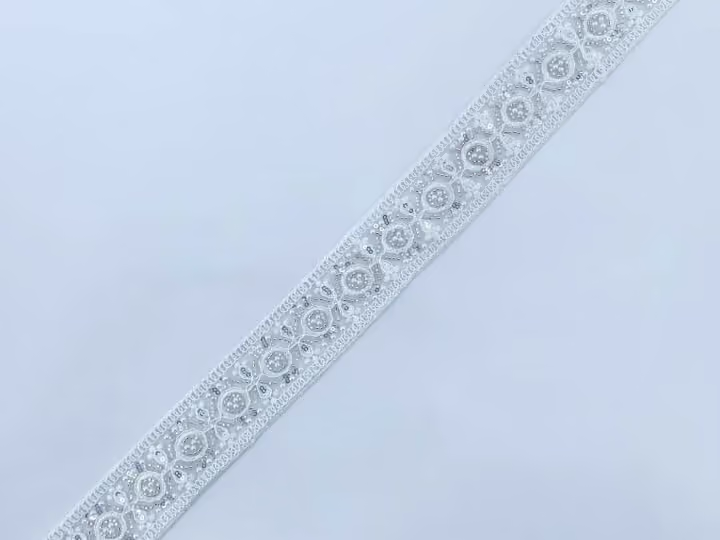
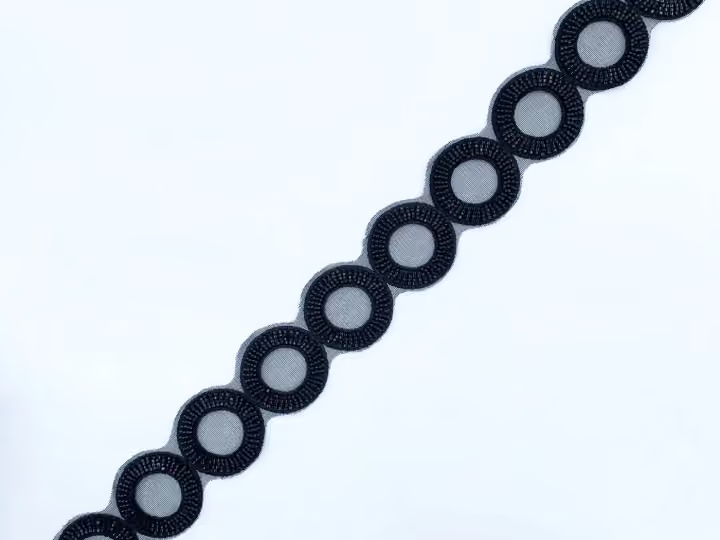
Ask the maker to propose suitable options, such as a fold or a joined corner, for that particular trim. Do not assume every strip can be mitred or cut into separate motifs. Photograph each trial from the same angle and keep the actual sample; decorative units can behave differently where layers overlap.
Explore the productsCheck the motif and bulk
Look at the corner from normal viewing distance as well as close up. Review whether a repeated flower is broken, whether a raised decoration sits on the fold and whether the finished corner feels bulky. Ask the maker to assess the attachment, rather than pressing aggressively to make an unsuitable corner appear flat.
Add the approved turn to the plan
Record the selected method, lengths used and any extra material needed for each corner. Scale that record by the number of identical corners in the order. Keep these construction quantities distinct from supplier sale units and ask about current availability for the exact trim reference.
A practical comparison
| Review | Question | Record |
|---|---|---|
| Visible face | Is the motif acceptable at the turn? | Approved front image |
| Reverse face | Are layers and joins acceptable? | Back image and maker note |
| Quantity | How much did the trial use? | Length per approved corner |
Your buying checklist
- Mark angle and visible face
- Compare feasible trial methods
- Inspect motif and bulk
- Count every repeated corner
Discuss your fabric requirements with Rose
Save references, note quantities and send your questions. Confirm specifications and availability for the exact items you need.