Mark the contact areas
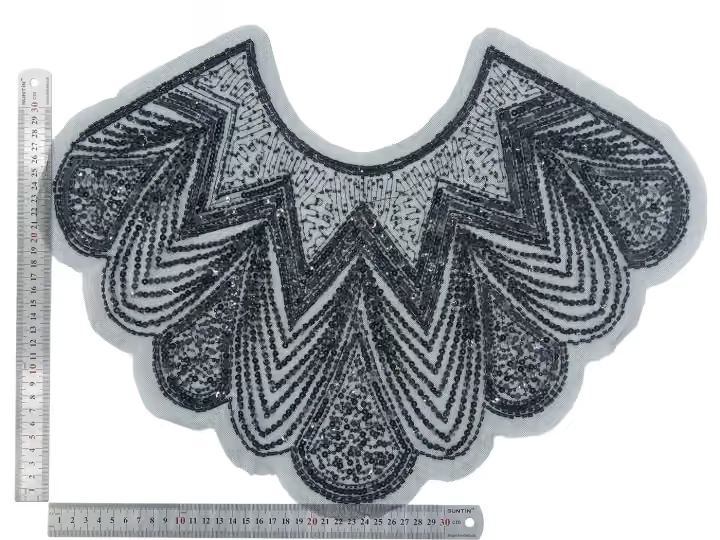
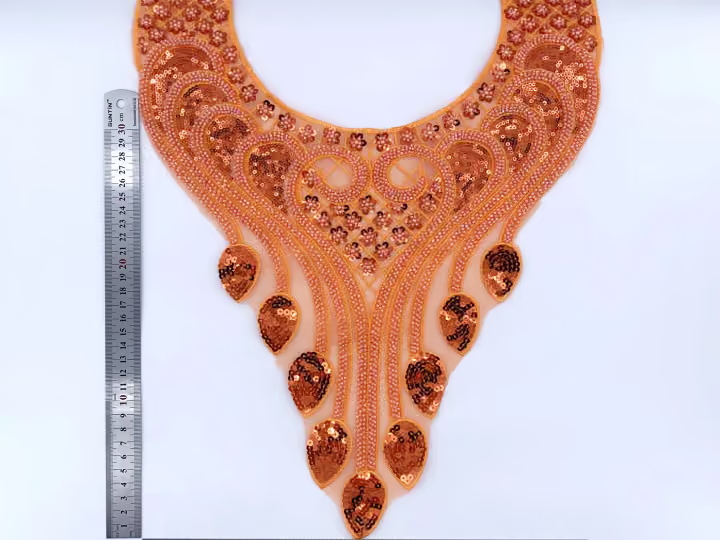
Use the garment pattern to identify where edges, backing or decoration can meet the body. Include the intended neckline depth and attachment position. The outside shape of a loose applique does not show which part will touch the wearer after the garment is assembled.
Examine front and reverse
Ask for a clear reverse view and inspect a designated sample with the maker. Record visible edges, attachment areas and any detail needing further review. Do not infer the backing material or a skin-safety certification from the colour or apparent softness of a photograph.
Explore the productsReview a representative garment
Use the actual lining and support in the trial. On a suitable form or consenting wearer, check normal position and movement without forcing contact. Record where the maker or wearer requests a construction change; an individual observation should remain specific to that trial.
Keep the approval bounded
Save the accepted assembly and any product-specific handling information. If the ornament, backing arrangement or neckline shape changes, revisit contact areas. Avoid advertising universal comfort or allergy-related claims from an informal fitting exercise.
A practical comparison
| Area | Evidence | Decision |
|---|---|---|
| Garment position | Actual neckline and ornament outline | Where contact can occur |
| Reverse | Clear sample view | Details needing review |
| Assembly | Planned layers and normal fit | Accepted construction version |
Your buying checklist
- Map the actual contact zones
- Inspect the reverse sample
- Use the planned garment layers
- Keep conclusions specific to the fitting
Discuss your fabric requirements with Rose
Save references, note quantities and send your questions. Confirm specifications and availability for the exact items you need.