Define the intended fold
Ask the maker to identify pleats, gathers or another specific construction on the pattern. Mark the finished visible width and the fabric area taken into the fold. These are project measurements, not product specifications. An informal handful of fabric does not reproduce a controlled pleat layout.
Preview at actual scale
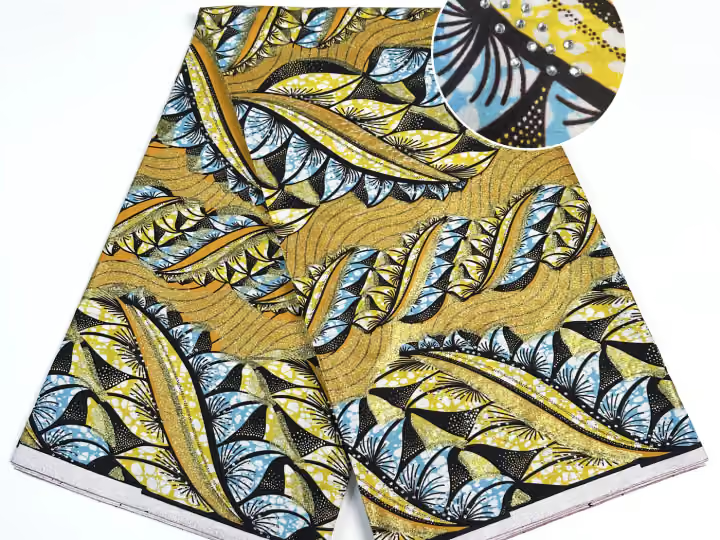
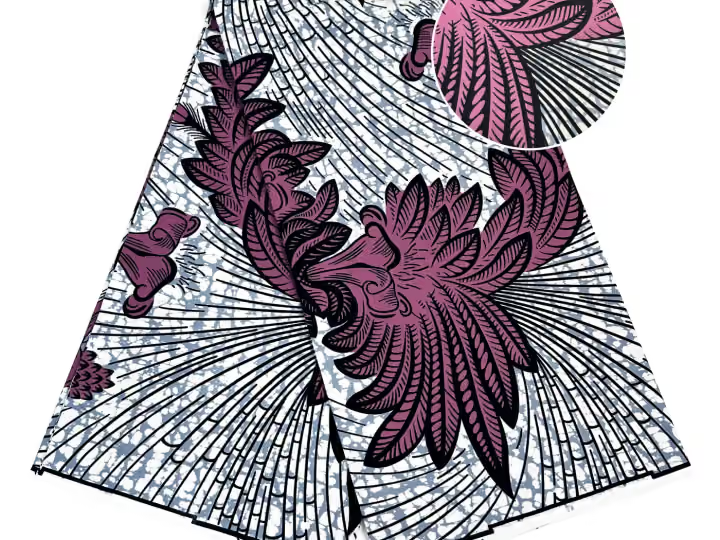
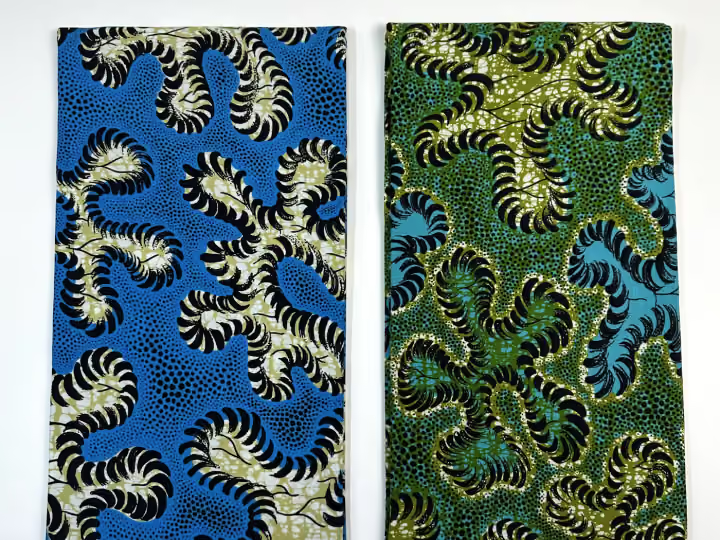
Place a complete motif area into a temporary fold using a designated sample. Compare it flat, closed and gently opened. Look at whether a recognisable centre disappears or repeats awkwardly. Photograph the complete trial so that a close-up does not hide the overall rhythm of the garment.
Explore the productsReview the garment context
Show the folded section beside the planned plain panels, waistline or sleeve attachment. Ask the designer whether the change in motif visibility is intentional. Do not infer that a print unsuitable for one pleat depth is unsuitable for every garment; another construction may use it differently.
Calculate after approval
Have the maker measure the accepted layout and size mix. Keep fold consumption, pattern positioning and chosen reserve separate in the calculation. Six yards per wax piece does not establish a fixed number of pleated skirts. Recheck the layout if the fold depth or garment size changes.
A practical comparison
| View | What it reveals | Record |
|---|---|---|
| Flat sample | Complete motif and scale | Reference design area |
| Fold closed | Visible fragments and repetition | Accepted appearance |
| Fold opened | Changes during normal movement | Approved trial version |
Your buying checklist
- Name the exact fold construction
- Preview complete motifs at scale
- Review beside other garment panels
- Calculate from the accepted layout
Discuss your fabric requirements with Rose
Save references, note quantities and send your questions. Confirm specifications and availability for the exact items you need.