Start with confirmed quantities
List each garment style, size and number required. Keep customer reservations separate from speculative shop stock. State whether quantities describe complete outfits or individual garments; a skirt-and-top set must not be counted as one panel. Freeze a numbered version before asking for the fabric calculation.
Test the widest panels
Ask the pattern maker to check the largest critical panels against usable width, including their cutting allowances. Do not assume a smaller size layout scales smoothly to a larger size. A change in panel arrangement can alter length use even when the garment measurements rise only slightly.
Explore the productsUse piece boundaries honestly
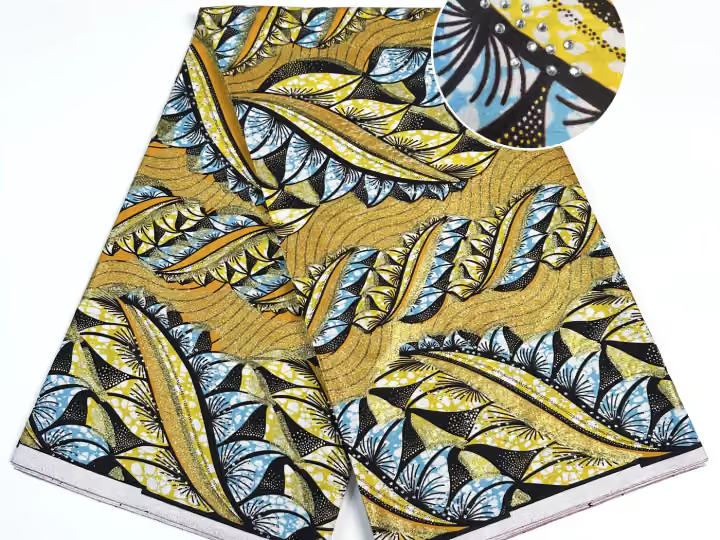
Our wax specification is 115 cm wide and six yards per piece, with a one-piece minimum. The cutter must still confirm usable width and whether the intended layout fits within each piece. Adding the lengths of several pieces on paper does not create one continuous cut for a panel that crosses a piece boundary.
Separate reserve from consumption
Record measured layout consumption, any explicit matching allowance and the buyer's chosen reserve as separate lines. Recalculate when the size mix changes. This makes a later increase in larger sizes visible instead of hiding it inside a fixed average. Have the workshop approve the final piece count before order confirmation.
A practical comparison
| Line | Input required | What it controls |
|---|---|---|
| Size mix | Style, size and garment count | Actual cutting demand |
| Layout | Usable width and piece boundary | Whether panels fit |
| Reserve | Buyer-approved extra quantity | Contingency kept separate |
Your buying checklist
- Confirm garments versus outfits
- Check the largest panels
- Respect six-yard piece boundaries
- Recalculate after size changes
Discuss your fabric requirements with Rose
Save references, note quantities and send your questions. Confirm specifications and availability for the exact items you need.