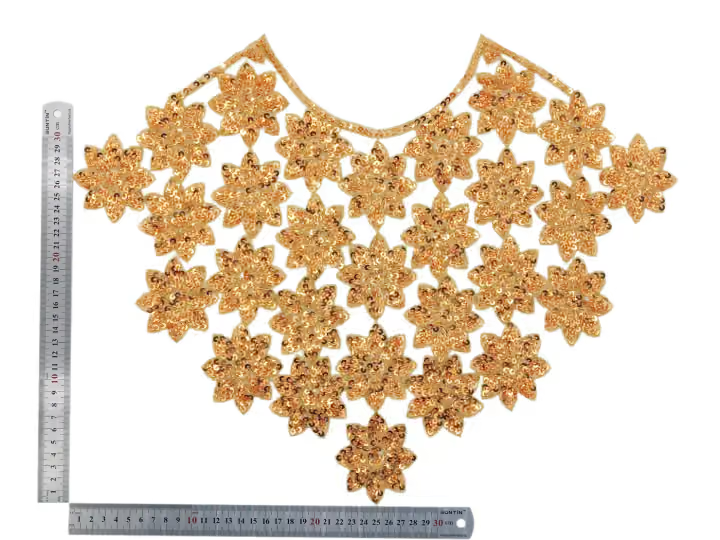
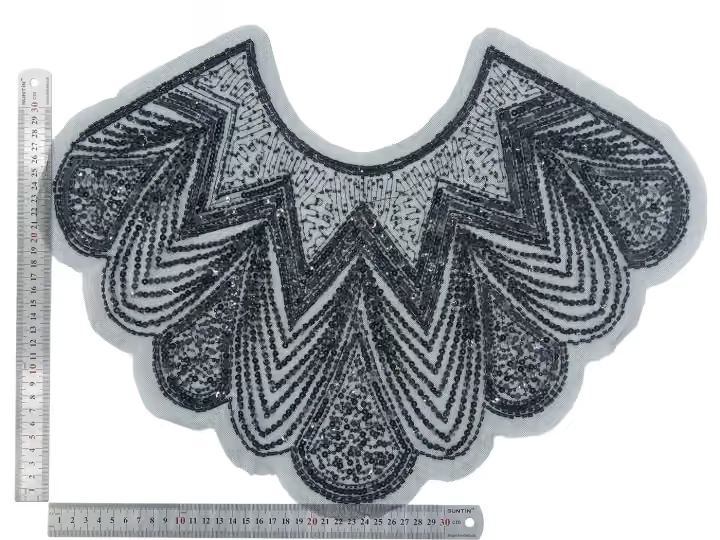
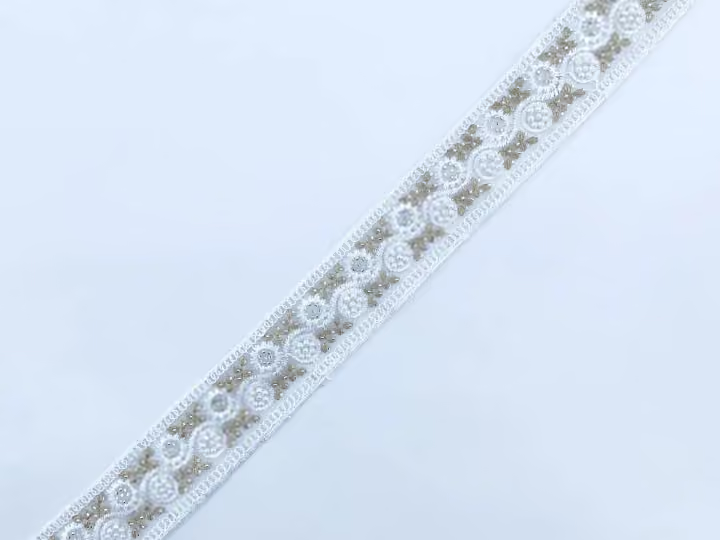
Identify the selected reference
Use the product number and a labelled image showing the ornament under discussion. Distinguish the catalogue product from a customer's inspiration photograph. A proposed combination of several items should keep separate references unless the supplier specifically confirms a defined set.
Request an explicit contents list
Ask which components and quantities belong to one sales unit. If the design needs a left-right pair, confirm how the pair is supplied. Keep an included-parts answer separate from size, material or availability confirmation, which may still require their own questions.
Explore the productsMap contents to the garment
Have the maker mark where each component is used and what additional attachment or finishing materials are needed. A decoration shown loose is not proof that it includes a closure or a ready-to-apply backing. Record what the workshop must obtain independently.
Confirm the order count
Translate the garment requirement into the confirmed sales unit and check the arithmetic with the contents list. Preserve that list in the order confirmation. If an alternative reference is offered, verify its contents again rather than carrying over the original set definition.
A practical comparison
| Field | Question | Keep |
|---|---|---|
| Identity | Which exact reference is selected? | Labelled product image |
| Sales unit | What parts and quantities are included? | Explicit contents list |
| Garment mapping | What else does the maker need? | Additional components list |
Your buying checklist
- Identify the exact ornament
- Confirm contents per sales unit
- Map parts to the garment
- Recheck contents for substitutes
Discuss your fabric requirements with Rose
Save references, note quantities and send your questions. Confirm specifications and availability for the exact items you need.