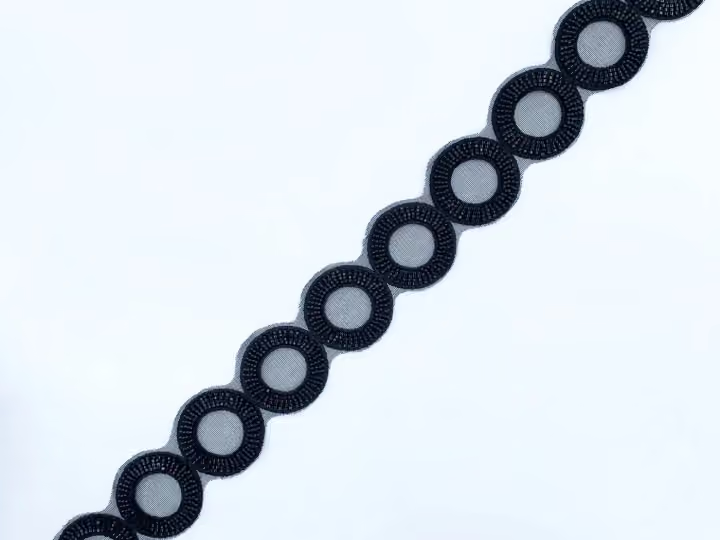
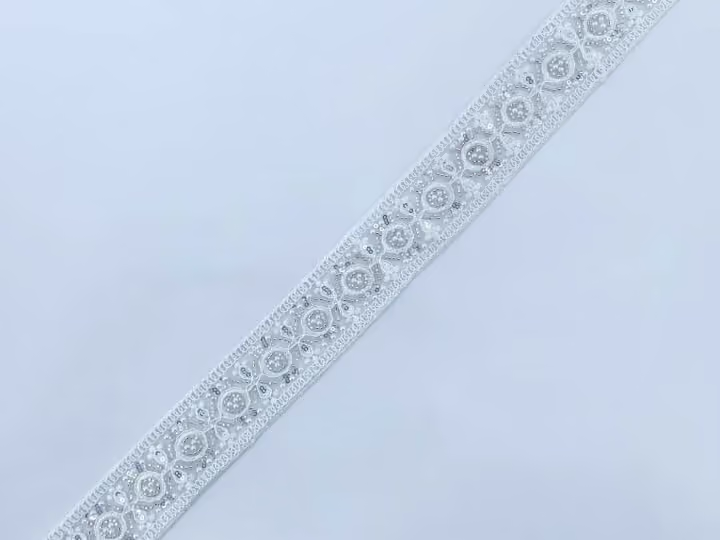
Define the intended pair
State whether the result should be identical, mirrored or deliberately different. Show left and right components together from the wearer's viewpoint. Do not assume one repeated trim provides mirror-image motifs. Ask what can be achieved with the selected design before committing to an exact visual symmetry.
Mark finished reference points
Use the same finished reference, such as the cuff opening or sleeve seam, on both sides. Place a recognisable motif relative to that mark and photograph the pair. The cut ends may include different allowances, so equal raw strip length is not enough to prove the visible decoration matches.
Explore the productsCheck width and direction together
Lay both pieces side by side without pulling. Compare the visible edge, motif sequence and direction at the attachment line. If one piece must turn over to create a mirror, review its reverse appearance with the maker. The back of a decorative trim is not automatically an approved visible face.
Calculate by approved pairs
Keep the pair template and measure the material used for both components, including the approved start points and joins. Multiply by garment count only after the sample is accepted. Confirm sale units and suitable cut lengths with Rose; no generic trim width or minimum is assumed from the wax category.
A practical comparison
| Reference | Left and right comparison | Approval |
|---|---|---|
| Design intention | Identical or mirrored appearance | Feasible pair rule |
| Finished point | Motif at opening or seam | Shared placement reference |
| Trial quantity | Length used for both pieces | Requirement per garment pair |
Your buying checklist
- Specify identical versus mirrored
- Use finished reference points
- Check both visible faces
- Measure a complete approved pair
Discuss your fabric requirements with Rose
Save references, note quantities and send your questions. Confirm specifications and availability for the exact items you need.