Look beyond the busiest detail
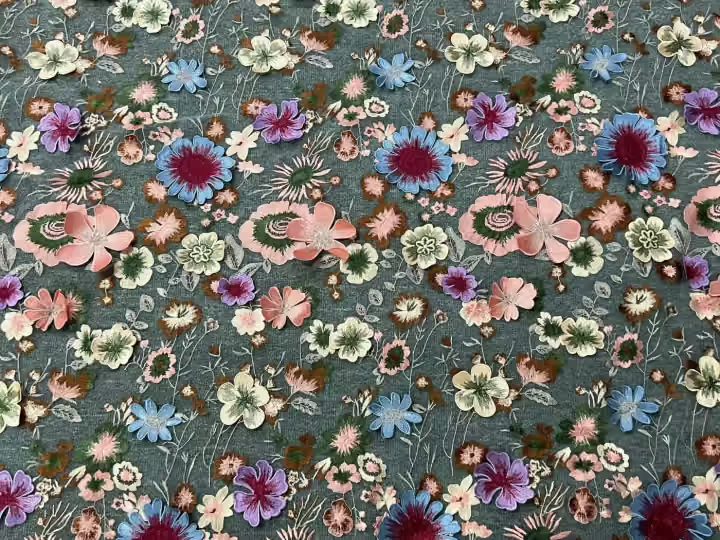
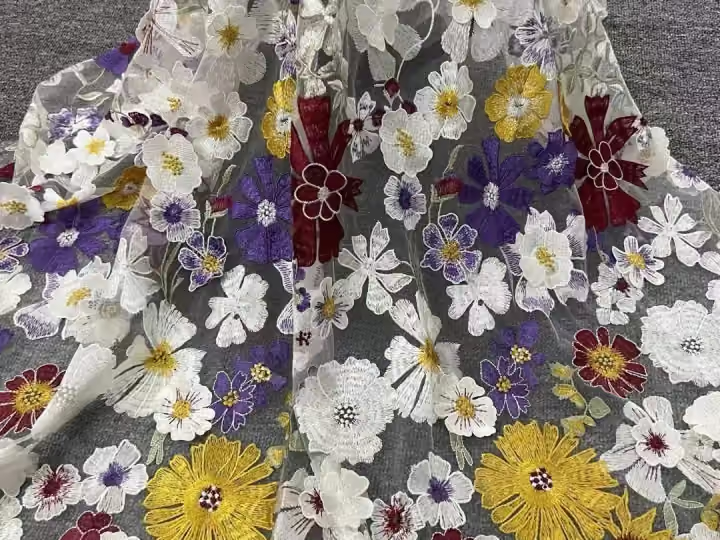
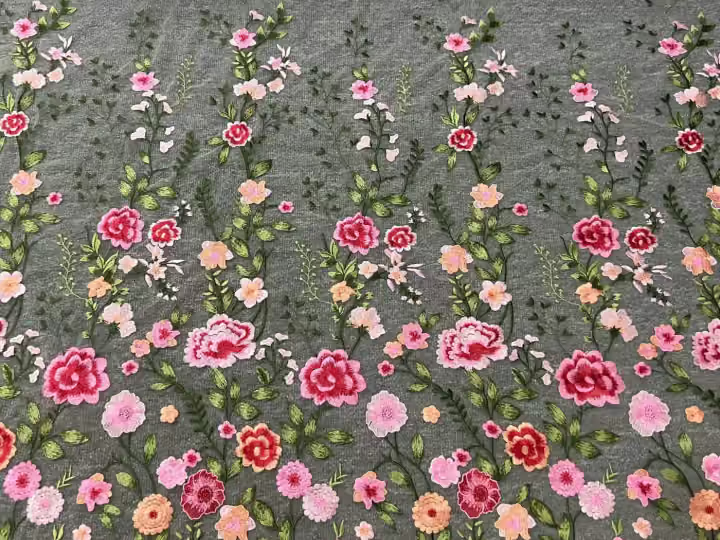
Request a flat full-width view and a close-up from a clearly identified position. A close view of a flower tells you about that flower, not how much of the whole fabric it occupies. Include quiet ground areas in the comparison so that sparse and heavily decorated zones are both visible.
Map the garment zones
Outline the bodice, sleeve and skirt areas that matter to the design. Note which zones require coverage and where open ground is acceptable. A border-heavy fabric may suit a hem while leaving a bodice relatively plain. That distribution can be useful, but it must agree with the garment brief.
Explore the productsTest with the planned backing
Place the candidate sample over the proposed lining and view it flat and hanging. Ask the maker to assess the areas that contact the body or cross seams. The visual amount of embroidery does not establish fibre content, opacity in every light or a numerical fabric weight; request those details separately when needed.
Buy for the approved map
Retain the sample orientation, full-width image and marked panel sketch together. Ask for the exact product reference and any relevant current variation. If the layout depends on a densely decorated section, verify that the required section can be obtained in the intended sale unit before calculating bulk garment quantities.
A practical comparison
| Zone | View needed | Decision to record |
|---|---|---|
| Bodice | Panel outline over full design | Required coverage area |
| Sleeve | Quiet ground and decorated section | Accepted distribution |
| Hem | Border and adjacent ground | Placement within usable width |
Your buying checklist
- Request full-width and detail views
- Mark coverage-critical panels
- Compare with the intended lining
- Confirm access to the required sections
View the dated embroidery warehouse gallery
Discuss your fabric requirements with Rose
Save references, note quantities and send your questions. Confirm specifications and availability for the exact items you need.