State the silhouette first
Explain whether the garment needs a crisp outline, soft folds or a controlled flare. Include a reference sketch and the intended panel length. The words heavy and flowing are interpreted differently, so describe the shape you want the maker to evaluate instead of relying only on a marketing adjective.
Make the views comparable
Ask for the same sample dimensions, suspension method and camera view for each candidate where feasible. Show the sample at rest and with gentle movement. A tightly gathered small swatch and a broad loose panel answer different questions; comparing them directly can make the wrong fabric look more fluid.
Explore the productsInclude the real layers
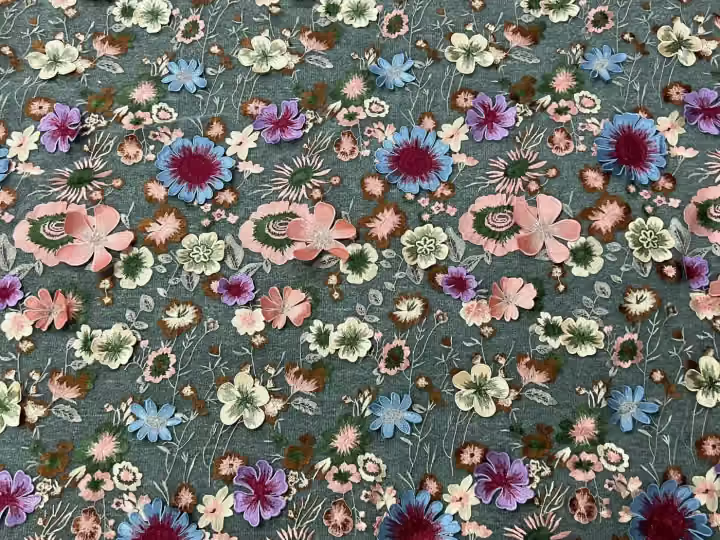
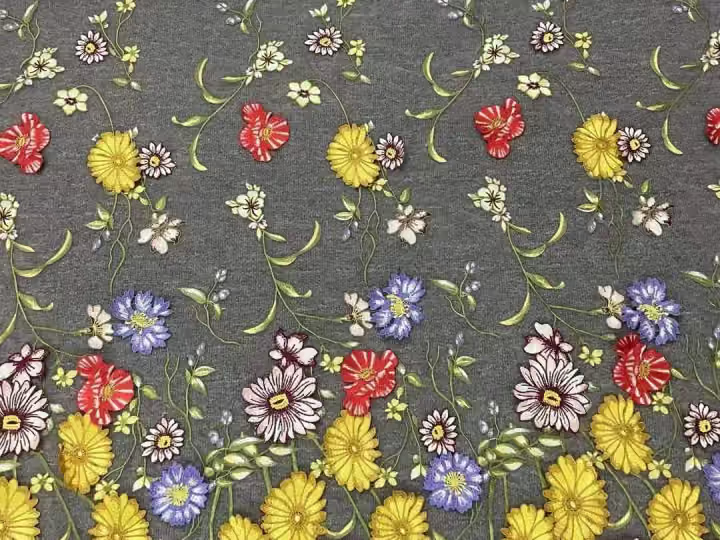
Review the embroidered material alone and with the intended lining or support. Ask the maker to assess the combined assembly, especially at heavily decorated areas. Fabric weight in grams per square metre, if available for the exact reference, is a separate fact; drape cannot be reduced to that one number.
Approve through a garment trial
Shortlist with hanging views, then ask for a representative sewn trial when silhouette is critical. Record sample dimensions, layers and observations. Do not infer composition or confirmed weight from a video, and do not promise that a full-length garment will behave exactly like a small hanging sample.
A practical comparison
| View | Keep consistent | What to observe |
|---|---|---|
| Flat sample | Scale and orientation | Decoration distribution |
| Hanging sample | Size and support | Folds and outline |
| Layered trial | Actual lining and construction | Combined garment behaviour |
Your buying checklist
- Describe the desired silhouette
- Use comparable sample views
- Include planned layers
- Approve a representative sewn trial
View the dated embroidery warehouse gallery
Discuss your fabric requirements with Rose
Save references, note quantities and send your questions. Confirm specifications and availability for the exact items you need.