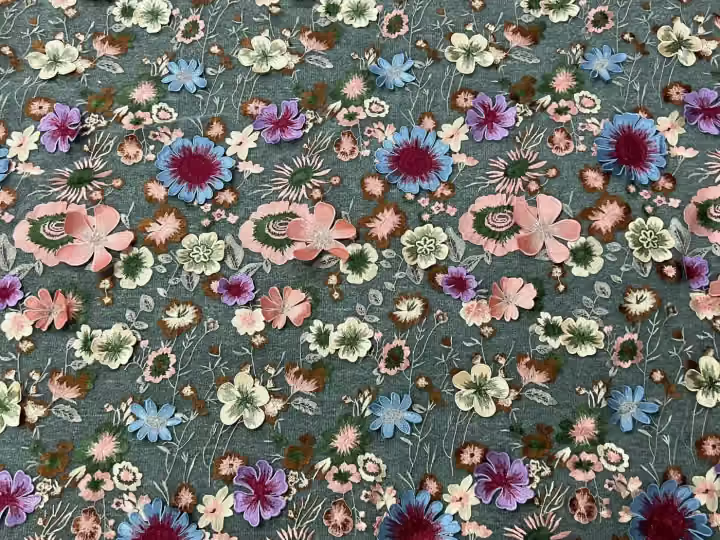
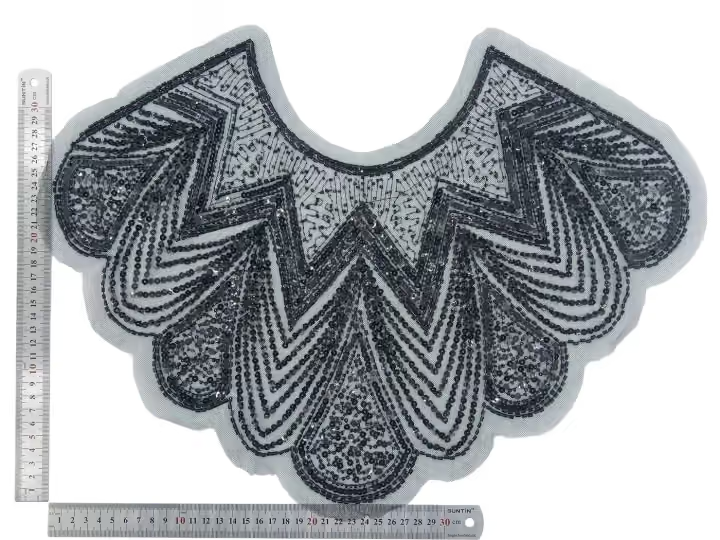
Keep the sample identity fixed
Use the same reference, sample area and orientation for each view. Record whether the sample is shown alone or over a named lining. Two different sections may have different decorative coverage, so changing the area at the same time as the light makes the comparison harder to interpret.
Name the viewing conditions
Ask for a normal front-lit view and, where relevant, a view with light behind the sample. Keep camera processing as consistent as practical. These are comparative observations, not calibrated transmission measurements. Avoid treating a very bright backlight photograph as the normal appearance of every finished garment.
Explore the productsAssess the whole combination
Review the intended layers together at the important garment zones. Ask the maker whether extra coverage is required in the chosen design. A denser embroidered section does not automatically establish the behaviour of the quieter ground around it or of another colour option.
Record the accepted boundary
Save the selected lining reference, sample version and viewing notes. State which appearance was accepted and what remains to confirm. If the garment will be photographed or worn under a particular setting, request a representative trial instead of extending a single sample image into a universal coverage claim.
A practical comparison
| View | Keep identified | Purpose |
|---|---|---|
| Front-lit | Same sample and orientation | Normal visible appearance |
| Backlit | Light position and sample layers | Identify areas needing review |
| Combined layers | Exact lining and garment zone | Approve the planned assembly |
Your buying checklist
- Use the same sample area
- Name the lighting conditions
- Review the real lining combination
- Keep the approval limited to the observed trial
View the dated embroidery warehouse gallery
Discuss your fabric requirements with Rose
Save references, note quantities and send your questions. Confirm specifications and availability for the exact items you need.