Start with finished reference points
Mark centre front, openings, seams and other fixed points on the intended application line. Measure the route in its finished shape. A raw cut edge that includes allowances may give a different distance and place the last motif in the wrong visible position.
Use the actual repeat
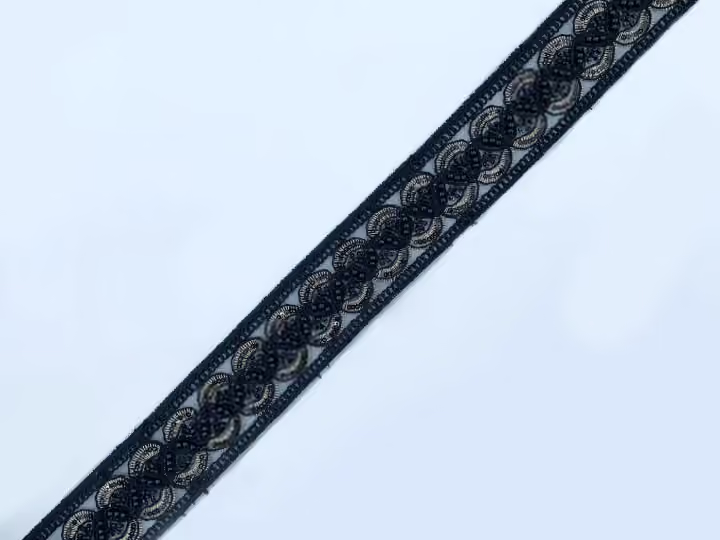
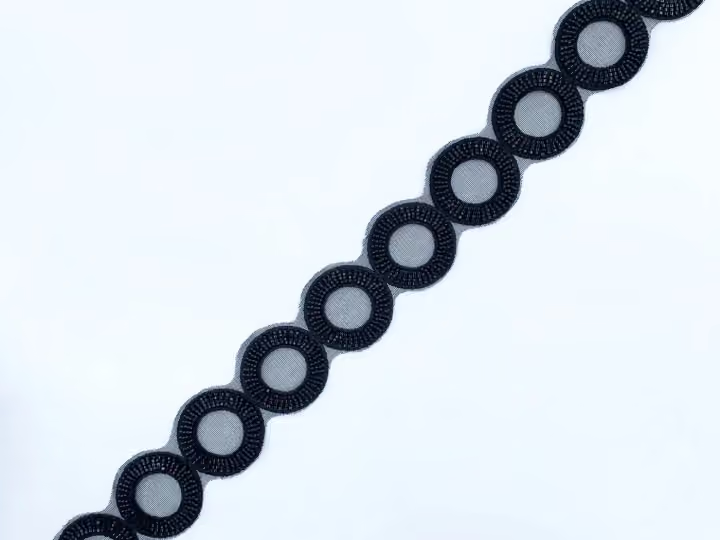
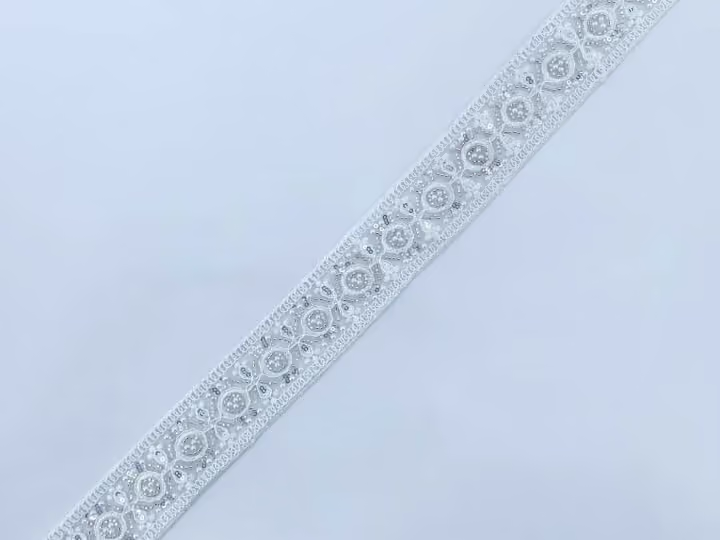
Lay the selected trim along the route at normal, unforced length. Identify where a recognisable motif starts and ends. Do not assume separate motifs are detachable or that the repeat spacing can be changed without affecting the structure; ask the maker about any proposed modification.
Explore the productsCompare workable endpoints
Preview options for the start position and approved join zone. For an illustrative design, a buyer may prioritise a central motif and accept a less exact relationship at a concealed join. Record that choice rather than demanding equal spacing and an invisible join without a sample showing both.
Measure the accepted method
Keep the full route image and the material consumption from the approved trial. Confirm appropriate cut lengths before purchase. If the garment route changes by size, ask whether a separate spacing rule is needed instead of copying the same starting point automatically.
A practical comparison
| Reference | Question | Record |
|---|---|---|
| Fixed points | Where must a motif align? | Marked finished route |
| Repeat | What sequence fits naturally? | Actual unforced trim layout |
| Endpoint | Where is a variation acceptable? | Approved start and join |
Your buying checklist
- Use finished garment references
- Lay the real repeat without stretching
- Approve the visible endpoints
- Recheck different route lengths
Discuss your fabric requirements with Rose
Save references, note quantities and send your questions. Confirm specifications and availability for the exact items you need.